
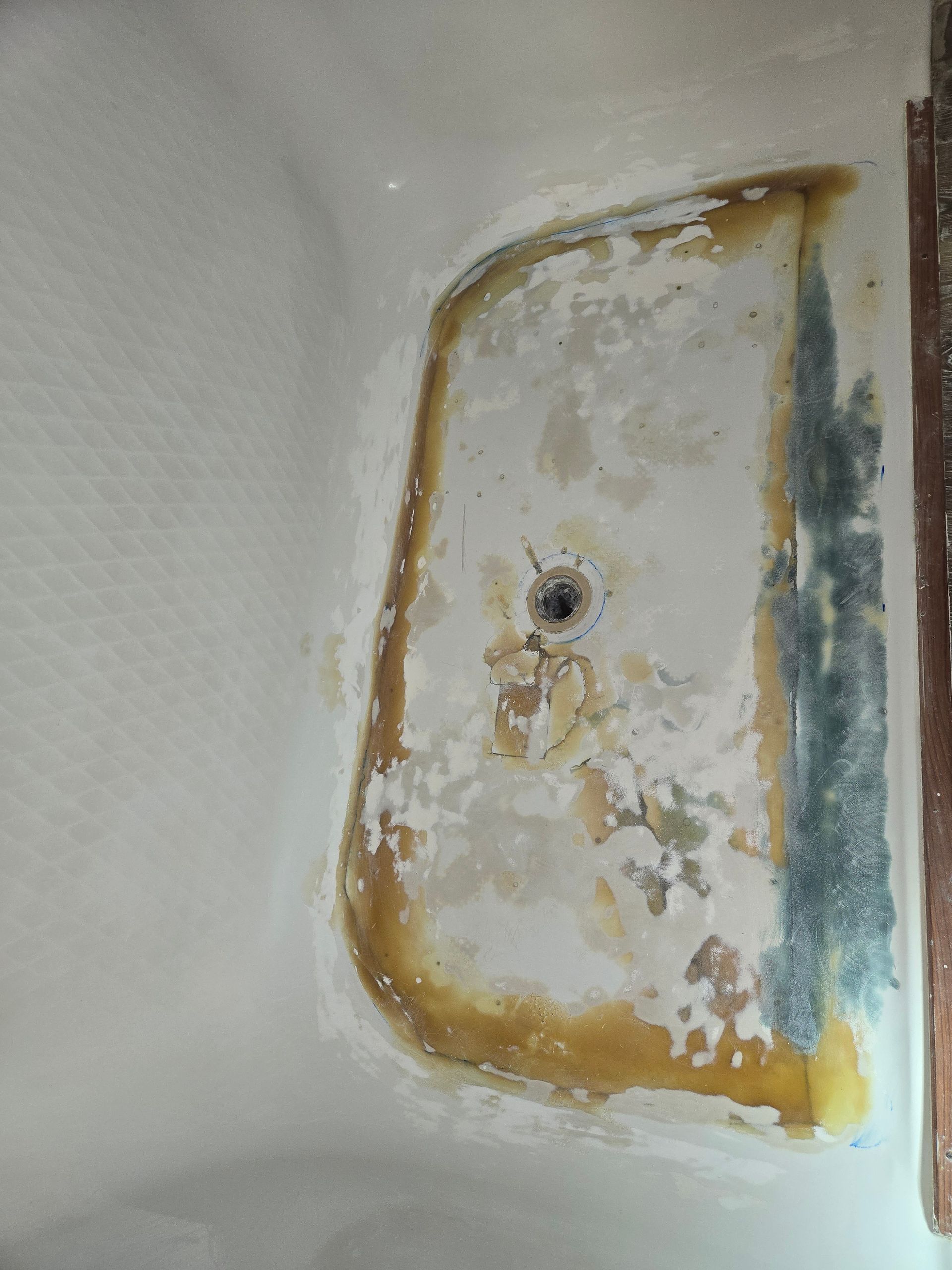
Walls and Bases That Show Their Age
Shower Repair in Springfield & St. Louis, servin the surrounding area for cracks, chips, surface wear, and cosmetic damage affecting fiberglass and acrylic systems
Surface wear shows up first in high-traffic showers where daily use gradually breaks down the gel coat or finish layer. Cracks form along seams or corners where flexing stresses the material, chips appear where shampoo bottles or metal fixtures strike the wall, and discoloration spreads across areas that have absorbed soap residue or hard water minerals over time. Tub Boys restores these damaged surfaces without removing the entire shower system, which preserves the waterproofing layers behind the walls and avoids the expense of rebuilding the enclosure from studs outward.
The repair process starts with cleaning and roughening the damaged area so bonding agents adhere properly, then applying compounds formulated to match the substrate material and rebuild the missing or cracked sections. Color matching ensures the repair blends with the surrounding surface rather than standing out as an obvious patch.
Schedule a shower damage assessment to determine which repairs will address the specific wear patterns affecting your enclosure.
How Shower Surface Repair Addresses Water Damage Risk
Cracks and chips compromise the water barrier that keeps moisture out of the wall cavity, and once water penetrates behind the shower surround, it saturates drywall, rots studs, and creates conditions for mold growth that spread beyond the immediate shower area. Repairing surface damage closes those entry points and restores the integrity of the waterproof layer, which prevents minor cosmetic problems from escalating into expensive structural repairs that involve opening walls and replacing framing.
After the work is complete, you see a smooth, continuous surface where cracks and chips previously allowed water to seep through. The repaired areas hold up to spray and humidity without separating or peeling, and the shower looks uniform rather than patched. Functional water resistance returns, which protects the structure behind the walls from ongoing moisture exposure.
Repair work does not address issues caused by improper slope in the shower base or failed waterproofing membranes beneath the visible surface. If water pools in corners or drains slowly, those conditions require investigation beyond surface-level fixes to identify whether the pan or drain system needs adjustment.
Answers to Frequent Service Questions
Property owners considering shower repair often want to know how the process compares to full replacement and what results to expect.
What shower damage can be repaired without replacing the entire unit?
Cracks in the wall panels, chips along the base edges, worn or scratched surfaces, and localized impact damage can typically be restored if the shower retains its structural shape and the damage hasn't spread into the substrate or waterproofing layers.
How does repair minimize disruption compared to shower replacement?
Repair involves working on the existing surface without removing tile surrounds, cutting through walls, or disconnecting plumbing, which means the work is completed in less time and avoids the mess and expense of demolition, debris removal, and reinstallation.
Why do fiberglass showers crack more often than other materials?
Fiberglass flexes under weight and impact, and when the supporting structure beneath the shower base settles or weakens, that flexing concentrates stress along seams and corners where the material eventually fractures, especially in older installations where the original support may have deteriorated.
When should I repair a shower instead of planning a full bathroom remodel?
Repair makes sense when the shower layout, size, and plumbing locations work for your needs and the damage is limited to the visible surface rather than involving water-damaged studs, subfloors, or failed waterproofing that would require opening walls regardless.
How do repairs hold up in Southwest Missouri where humidity levels fluctuate seasonally?
Properly bonded repairs maintain adhesion through temperature and humidity changes because the compounds used are formulated to expand and contract at rates similar to the original shower material, which prevents separation or cracking caused by seasonal movement.
Tub Boys inspects the shower in person to identify all areas of damage and explain which repair methods will produce results that last. Arrange an evaluation to review your shower's condition and receive a plan that addresses both cosmetic appearance and long-term water resistance.