
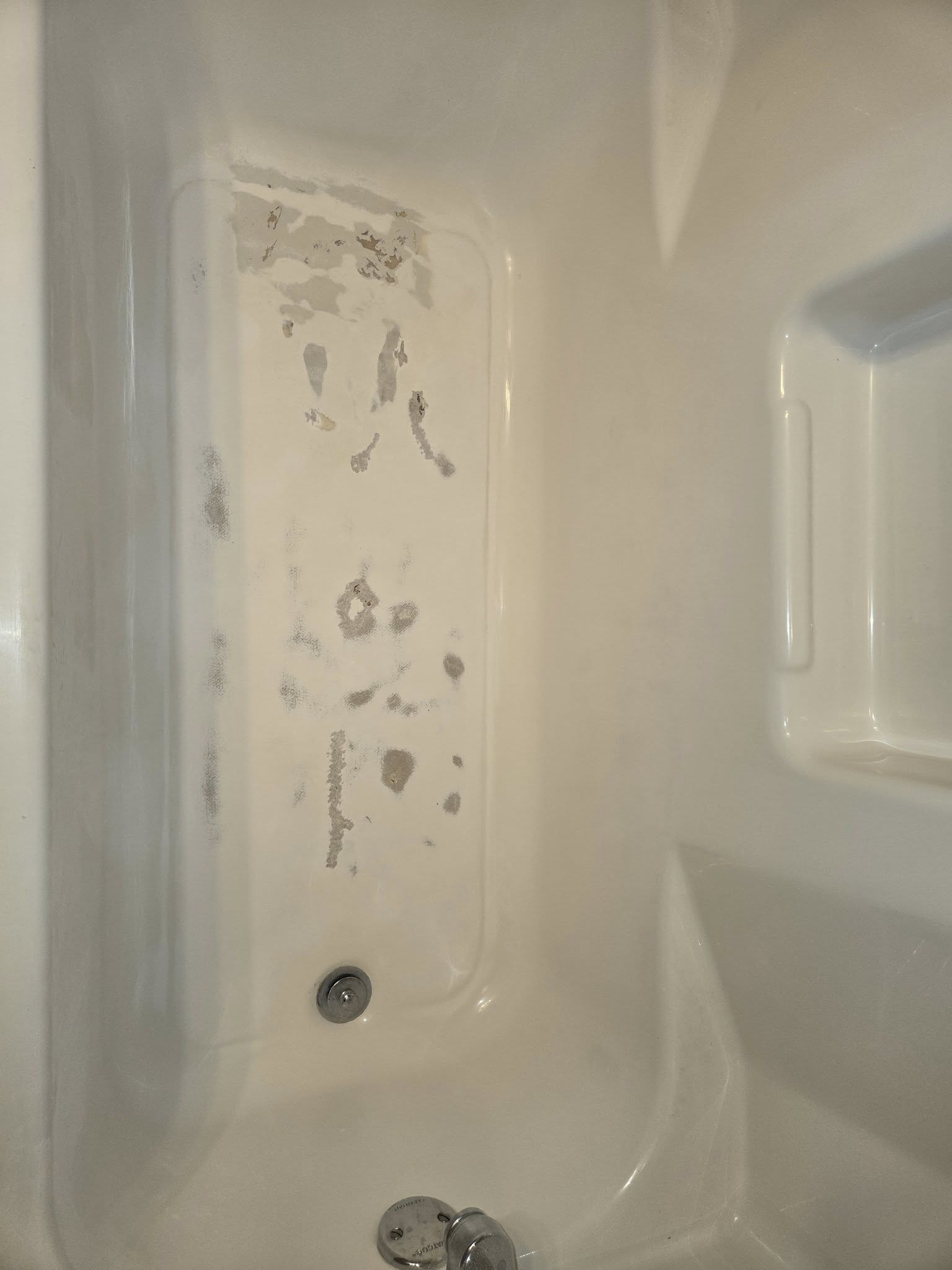
Floors That Flex or Leak Underneath
Pan Replacement in Springfield & St. Louis serving nearby cities for cracked, soft, or structurally failed shower floors that allow water penetration
Soft spots develop where the shower floor has separated from the subfloor or where the material has delaminated from repeated flexing, and cracks form when the pan lacks adequate support or when settling shifts the structure beneath. Water seeps through these failures and saturates the framing, which eventually causes rot, mold, and ceiling damage in rooms below the shower. Replacing the damaged pan addresses the source of the leak while preserving as much of the existing tile, walls, and plumbing as the condition of those components allows, which reduces the scope of the project compared to a full shower teardown.
Pan replacement involves removing the shower floor down to the subfloor, inspecting the framing and drain assembly for damage, and installing a new base that sits level and drains properly. If the surrounding walls and enclosure remain intact and undamaged, they stay in place, which shortens the timeline and limits the work to the compromised section.
Request an evaluation of damaged shower floors to determine whether pan replacement will resolve the issue or whether water damage has spread into areas that require additional repair.
What Changes After a New Shower Pan Is Installed
The shower floor feels solid underfoot rather than flexing or sagging when you step into the enclosure, and water drains consistently toward the outlet without pooling in low spots or running toward the walls. Proper slope built into the new pan directs water efficiently, which prevents standing water that contributes to soap scum buildup, mildew growth, and unpleasant odors that develop when moisture lingers after use.
You no longer see water stains on the ceiling below the shower or smell musty odors that indicate hidden moisture, and the floor maintains its position without cracking or separating along seams. The pan holds its shape over time because it rests on a stable base and drains without trapping water that would otherwise degrade the material from beneath. Tub Boys ensures the new installation addresses both the immediate failure and the conditions that caused the original pan to crack or soften.
Pan replacement assumes the drain connection remains functional and positioned correctly, and that the subfloor retains enough integrity to support the new base. If the framing has rotted or the drain has shifted, those repairs need to happen before a new pan will perform reliably, which may extend the project scope depending on what the inspection reveals.
Common Questions About This Service
Homeowners dealing with failed shower pans often ask about the replacement process and what signs indicate the floor needs attention.
What are the signs that a shower pan needs replacement rather than surface repair?
Soft or spongy areas that flex when you step on them, visible cracks that run across the floor, water stains on the ceiling below, persistent musty smells, or grout that continually cracks around the base even after repeated resealing all suggest structural failure that surface patching won't fix.
How does pan replacement preserve the rest of the shower?
Removing only the damaged floor section allows the walls, tile surrounds, and enclosure to remain in place if they haven't sustained water damage, which avoids the cost and timeline of rebuilding the entire shower from the studs outward.
Why do shower pans crack or develop soft spots over time?
Pans fail when the mortar bed or support structure beneath the floor settles unevenly, when the material flexes beyond its design limits due to inadequate reinforcement, or when water seeps under the pan through failed seals and gradually weakens the substrate, especially in older homes where installation standards were less rigorous.
When should I replace a shower pan instead of trying to seal cracks?
Replacement becomes necessary when cracks have allowed enough water penetration to damage the subfloor or framing, when the pan has lost structural rigidity and flexes during use, or when multiple repairs have failed because the underlying support no longer holds the floor in its intended position.
How do newer shower pans compare to older fiberglass models common in Union homes?
Modern acrylic and composite pans are thicker, include integrated reinforcement, and are manufactured with more consistent quality control than older thin fiberglass units, which means they resist cracking under normal use and maintain their shape longer when properly supported during installation.
Tub Boys evaluates the shower floor and the structure beneath to confirm whether pan replacement will resolve the problem or whether additional work is needed to restore safe, reliable drainage. Contact our team to schedule an on-site inspection and receive a detailed assessment of your shower pan condition.